If you host an app on Cloudways (or plan to) and it needs a newer PHP version, you will need to upgrade the PHP version on Cloudways.
Changing and upgrading the PHP version on Cloudways is very easy as well as all other settings and services. That’s because Cloudways is a managed cloud hosting platform and has its own control panel.
Cloudways currently supports PHP 7.4, 8.0, 8.1, 8.2, 8.3, and 8.4. New servers and apps start on PHP 8.2 by default, and PHP 8.4 (the newest version Cloudways offers right now) is only available on Cloudways Flexible servers running Debian 11 or 12.
Which version should you pick? PHP itself only supports 8.2 to 8.5 today. PHP 7.4, 8.0, and 8.1 no longer get security fixes, and 8.2 stops getting them on December 31, 2026, so moving to PHP 8.3 or 8.4 is the safe choice if your apps allow it.
Before you start upgrading:
There are a few things you should consider before changing your PHP version on Cloudways to avoid any website crashes and app errors. Read them carefully before you upgrade your server’s PHP version:
- See your application/s compatibility with the new PHP: Some applications and websites are not compatible with new PHP versions. Look at your apps on your server or their documentation and make sure that all apps you have on it can work smoothly with the new PHP version.
- If one application won’t work with the new PHP version, you used to need a separate server for it. Cloudways is now rolling out application-level PHP selection (in public preview, starting with servers launched from August 8, 2026), which lets each app on a server use its own PHP version. If your server doesn’t have it yet, a separate server is still the workaround.
- Backup your server before changing the PHP version: When you make a server backup, you create separate backups for all the applications that you have on the server. You will need to create a backup to the apps you have on your server so that if anything goes wrong you can revert to the previous situation by restoring the backups you created earlier.
That being said, let’s see how you can upgrade your server PHP version on Cloudways.
Change Cloudways Server PHP Version
Step 1: Open your Server Management (Control Panel)
To open your Server Management go to Cloudways and sign in to your account. Open Servers from the top menu bar to see all the servers you have with Cloudways.
Next, click on the server that you want to change its PHP version to open the Server Management (control panel).
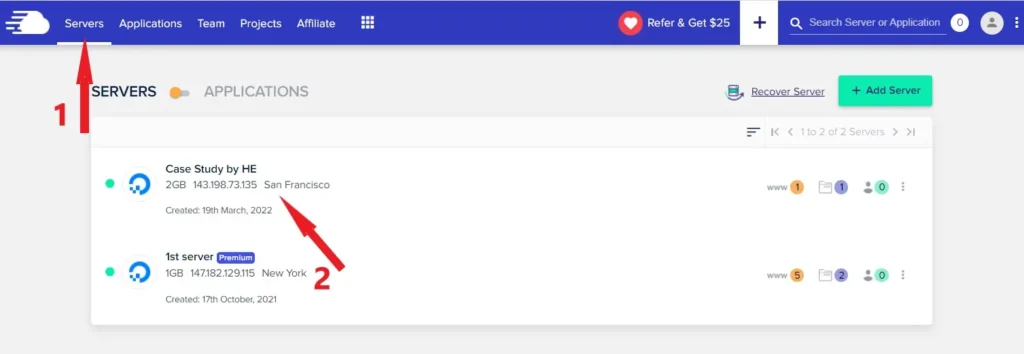
Step 2: Navigate to Settings and Packages
Under Server Management, click on Settings & Packages. This option opens all the server settings that Cloudways lets you change whenever you want.
After you open this section, click on the Packages tab, the tab that will have your server packages settings such as PHP and MySQL.
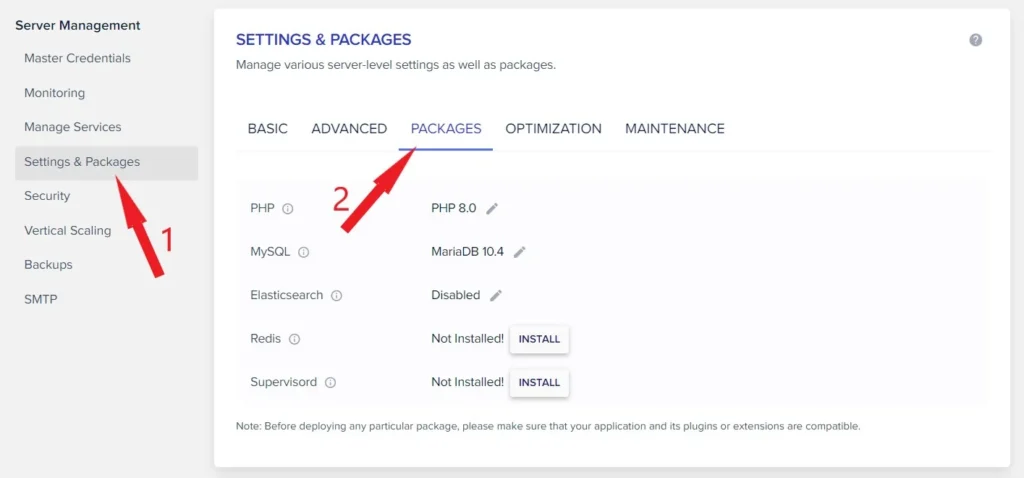
Step 3: Change your server PHP version
The first option in the Packages settings is the PHP and the PHP version. You will see the current version of your server PHP once you open the settings.
To change the PHP version of your server, click the Modify button to see the PHP versions Cloudways supports and choose the version you need. Cloudways asks you to confirm that your apps are compatible with that version; click Continue. The upgrade can take a few minutes. (Older dashboards showed a pen icon instead of the Modify button, like in our screenshot below.)
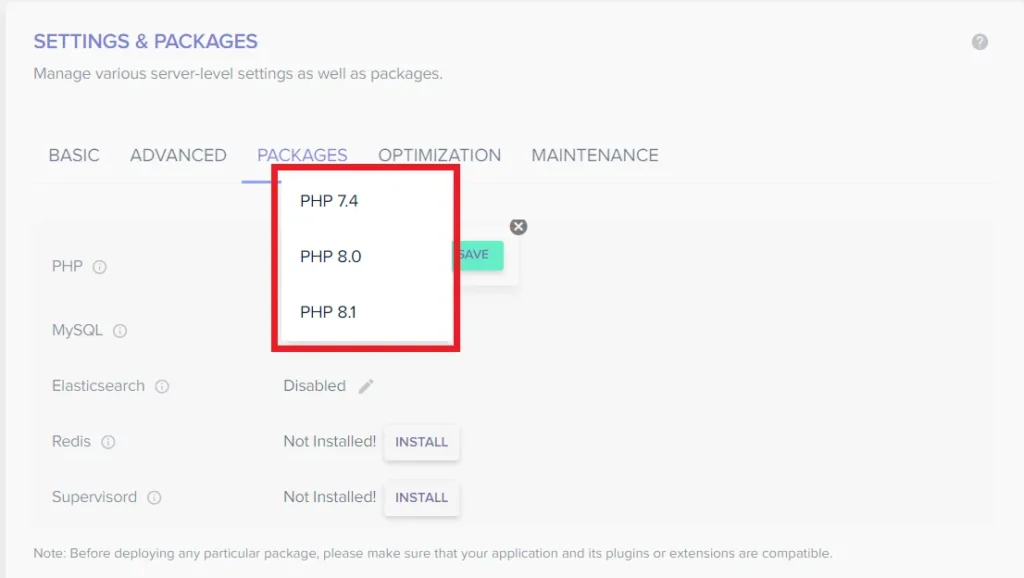
Once the upgrade finishes, you will see a notification on the same screen, and the PHP version of your entire server is updated. That’s it.
On Cloudways Autonomous the steps are different, because PHP is set per application: open My Applications from the side menu, pick your app, go to Workflow/Tools, then PHP Settings, select the version, and click Confirm. You can read more about that product in our Cloudways Autonomous (formerly Autoscale) guide.
Read also: