
Cloud computing changed how most websites and apps are hosted today.
For web hosting, it means servers you can scale, pay for by usage, and move around without touching hardware. If you want the hosting side in depth, read what cloud hosting is.
What Is Cloud Computing?
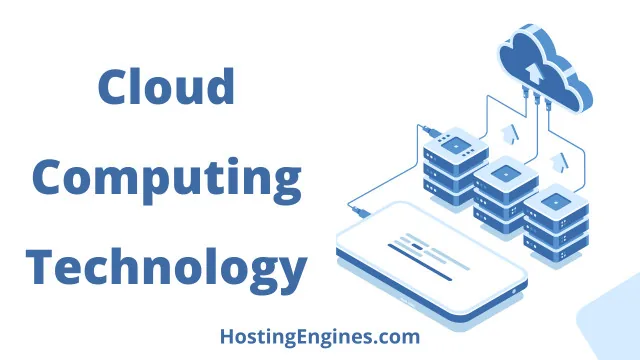
Cloud computing is the delivery of computing services over the Internet rather than relying on local servers or personal devices to store and manage data.
These services include servers, storage, databases, networking, and more. The US standards body NIST describes it as on-demand access to a shared pool of computing resources that can be provisioned and released quickly, with little effort from the provider.
Unlike other web hosting types, websites that are hosted on cloud hosting servers are not deployed on a single server.
Instead, a network of connected virtual and physical cloud servers (Clusters) host the websites.
Benefits of Cloud Hosting?
There are real benefits to choosing cloud hosting over other types.
Here are some reasons why cloud hosting is considered a better web hosting solution than other web hosting types:
Low cost:
When using a cloud hosting server, you pay only for the resources you consumed “Pay as you Go”.
Also, the cloud hosting service eliminates the expenditures of the resources needed to run and manage your infrastructure. Accordingly, the prices for renting the server will be decreased.
Fast servers:
In addition to the dedicated resources it offers, the Cloud computing services provide self-service and on-demand, which reduces the pressure on the applications. And that’s what makes it even faster.
Reliability:
Cloud hosting providers host a copy of your websites and applications on a cluster of servers so that when any server fails to deliver the content, another server will do the job.
That way a single hardware failure rarely takes your website down, which makes cloud hosting more reliable.
Scalability:
On cloud servers, you can easily upgrade or downgrade your resources to the amount of resources you need. You don’t need to move to another big server while you grow your business.
For instance, if you started small and hosted your website on a cloud server, and after a certain time you grew your business, you can easily scale up your server from your server dashboard provider.
This can be seen in other web hosting types such as shared hosting, but the scalability they offer is limited.
The other good thing is that if your web application experiences a sudden increase in traffic, the cloud server can handle it without any issues.
Security:
Cloud hosting services provide many security features and technologies for customers to keep their data and applications safe.
Types of Cloud Services
Cloud computing is offered in various service models, the three main are:
- Infrastructure as a Service (IaaS): IaaS provides virtualized computing resources over the Internet. Users can rent virtual machines, storage, and networking infrastructure to build their own platforms without investing in physical hardware.
- Platform as a Service (PaaS): PaaS offers a higher level of abstraction, providing developers with a platform to build, deploy, and manage applications without worrying about the underlying infrastructure.
- Software as a Service (SaaS): SaaS delivers fully functional software applications over the Internet. Users can access and use these applications through their web browsers without the need for installation or maintenance.
Cloud vs VPS
People often get confused when they hear that there is a cloud hosting type that provides dedicated resources on a shared CPU and there is a VPS hosting type that provides the same dedicated resources on a shared CPU.
The real difference is what sits underneath. A classic VPS is a slice of one physical server, so if that machine fails, your VPS goes down with it. A cloud server draws on a pool of connected machines, so it can be resized in minutes, moved to healthy hardware, and billed for what you actually use.
So we can call the cloud hosting “Cloud VPS” and the VPS “Normal or Standard VPS”.
Read also: Web Hosting: What is it and how does it work? And if you’re ready to pick a provider, see our list of the best cloud hosting services.